


A Pilgrimage of Unity: Pope Leo XIV’s Historic Visit to Turkey for the 1700th Nicaea Anniversary
In a moment poised between ancient history and renewed hope, Pope Leo XIV has arrived in Turkey, embarking on an Apostolic Journey that is being heralded as a watershed event for global Christian unity. This pilgrimage marks the 1,700th anniversary of the First Ecumenical Council of Nicaea (325 AD), a cornerstone of Christian doctrine that continues to bind millions of believers worldwide. As the new Pontiff’s first international trip since his election in May 2025, the visit signals a profound commitment to ecumenism and interfaith dialogue, fulfilling a cherished vision originally held by his predecessor, the late Pope Francis.
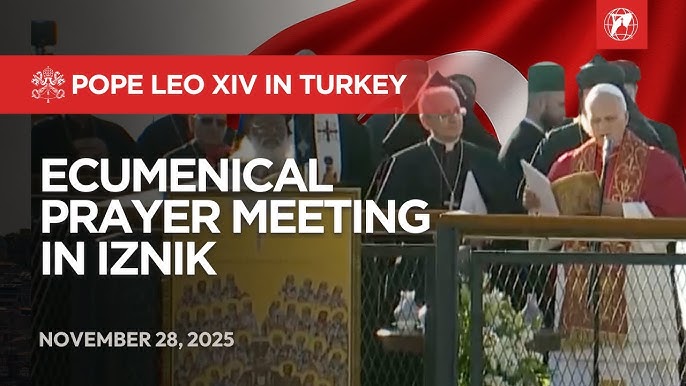
The visit, running from November 27–30, 2025, sees the Pope joining Ecumenical Patriarch Bartholomew I, the spiritual leader of the world’s Orthodox Christians, in a joint commemoration at the very site where the Church’s fundamental creed was forged. For those seeking insights on Pope Leo XIV Turkey visit 2025, the Nicaea Council anniversary, or the ongoing quest for Christian unity in İznik, this comprehensive guide details the significance, the backstory, and the full, historic itinerary of this monumental spiritual journey.
🏛️ The Enduring Legacy of the Council of Nicaea: The Creed that Unites
To truly grasp the gravity of this 1,700-year commemoration, one must revisit the transformative role of the First Council of Nicaea. Held in May 325 AD in the city of Nicaea (modern-day İznik, Turkey), this was the first assembly of bishops from across the Roman Empire. Convened by Emperor Constantine the Great, the council addressed the fierce Arian controversy, which centered on the nature and divinity of Jesus Christ.
The council’s decisive action was to affirm Christ’s divinity, declaring the Son to be “of the same substance” (homoousios) as the Father. This theological affirmation formed the basis for the Nicene Creed, a statement of faith still recited in Catholic, Orthodox, and many Protestant liturgies today.
Key outcomes that cemented Nicaea’s status as a spiritual milestone included:
- The Nicene Creed: A universally accepted profession of Trinitarian faith, its words—”We believe in one Lord, Jesus Christ, the only Son of God, eternally begotten of the Father, God from God, Light from Light, true God from true God”—are a shared heartbeat for nearly all Christian traditions.
- Easter Date Standardization: The council set a uniform rule for calculating the date of Easter, which symbolically underscores the coincidence of the Catholic and Orthodox Easter dates in 2025, a rare and profound sign of unity.
- Canonical Reforms: It established essential canons that shaped early Church governance and discipline, setting a framework for ecclesiastical law.
By commemorating this event in İznik, the visit not only honors shared Christian roots but also highlights the deep history of Christianity in Turkey, a nation bridging East and West, and promotes interreligious dialogue with its Muslim majority. Searches for İznik Nicaea Council 1700th anniversary reflect a global interest in this sacred geography.
torch: The Vision of Francis, The Fulfillment by Leo XIV
The seeds of this pilgrimage were sown years ago by Pope Francis, who frequently expressed his “wholehearted” desire to join Patriarch Bartholomew I in İznik for the 1,700th anniversary. Francis viewed the trip as integral to the Catholic Church’s 2025 Holy Year, a time for seeking unity and mercy, recognizing the Nicene Creed as a “common root of the faith.”
Tragically, Francis’s reported death in April 2025, shortly after the rare shared Easter date, altered the plans. However, the swift election of Pope Leo XIV—born Giovanni Battista Rossi in Milan, Italy, and reportedly a former Archbishop of Turin with expertise in patristics—ensured the vision’s fulfillment. Leo XIV, with his papal motto “Unitas in Veritate” (Unity in Truth), immediately embraced the invitation, positioning himself as a bridge-builder who honors the ecumenical legacy of his predecessor. He affirmed the visit was a “pilgrimage to the roots of our common faith” and released the Apostolic Letter, “In Unitate Fidei” (“In the Unity of Faith”), on November 23, dedicating it to the Creed in anticipation of the trip.
For those querying Pope Francis Nicaea plans 2025, it is clear his emphasis on reconciliation and dialogue has been seamlessly adopted and continued by his successor, Pope Leo XIV, making the trip an act of both remembrance and continuity.
🤝 Leo XIV and Bartholomew I: A Living Icon of Unity
The core purpose of this Apostolic Journey is the public and solemn act of ecumenical communion between the Catholic and Orthodox Churches. This is not merely a diplomatic exchange; it is a “living icon of the Church’s original unity,” as described by Orthodox leaders.
The relationship between the Pope of Rome and the Ecumenical Patriarch of Constantinople is the bedrock of the dialogue of love (dialogue caritatis). Pope Leo XIV’s presence alongside Patriarch Bartholomew I, especially on the Feast of St. Andrew, the Ecumenical Patriarchate’s patron saint (November 30), builds on the historic rapprochement initiated by Pope Paul VI and Patriarch Athenagoras in the 1960s. The world awaits a Joint Declaration expected to be signed by the two primates, which is anticipated to address deeper theological commonalities and future steps toward shared sacraments or a common Easter date—a key initiative originally championed by Pope Francis.
🗺️ Detailed Itinerary: Pope Leo XIV’s Program in Turkey (November 27-30, 2025)
The four-day schedule is a meticulous blend of diplomatic engagement, pastoral care for Turkey’s Christian minority, and the culminating ecumenical acts. This is the definitive breakdown for those seeking the Pope Leo XIV Turkey itinerary 2025:
Day 1: Thursday, November 27 – Arrival and Official Welcome (Ankara & Istanbul)
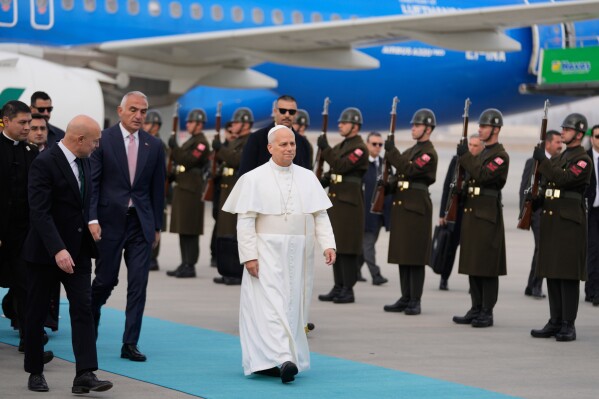
The journey began with the papal flight, “Shepherd One,” landing in Ankara.
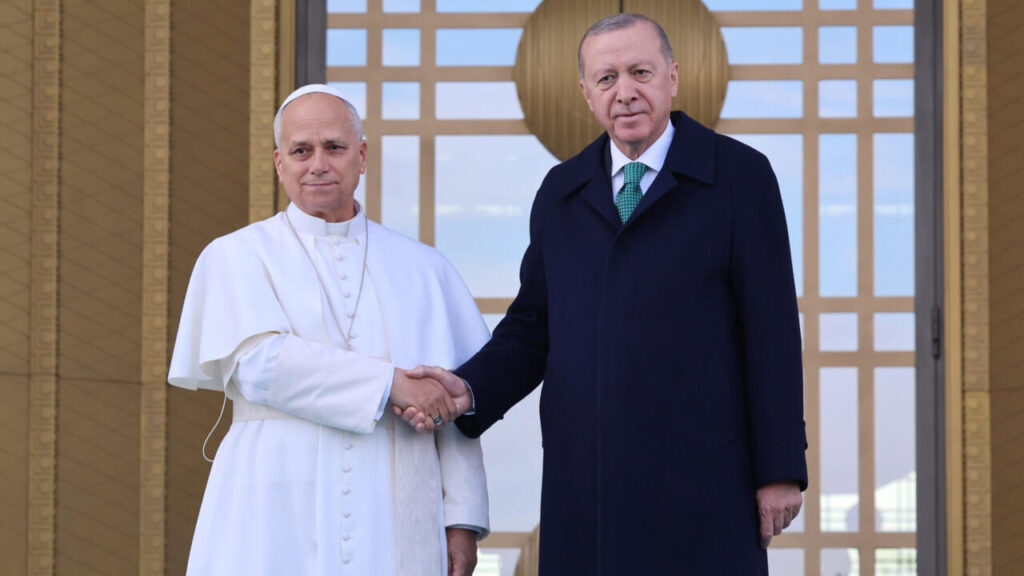
- Official Welcome: Pope Leo XIV was received by President Recep Tayyip Erdoğan and held bilateral talks at the Presidential Palace, focusing on regional conflicts, the protection of Christian communities, and religious freedoms.
- Tribute to the Republic: The Pope visited the Atatürk Mausoleum (Anıtkabir) to honor the founder of the modern secular Turkish state, reinforcing the Vatican’s respect for the nation’s political identity.
- Transfer to Istanbul: The day concluded with the Pope’s flight to Istanbul for his pastoral and ecumenical engagements.
Day 2: Friday, November 28 – Nicaea Commemoration (Istanbul & İznik)
Today marks the pivotal moment of the entire pilgrimage.
- Pastoral Encounter: The Pope met with the local Catholic community (bishops, priests, consecrated persons, and lay faithful) at the Cathedral of the Holy Spirit in Istanbul. He also visited the Nursing Home of the Little Sisters of the Poor, underscoring the Jubilee theme of mercy and service.
- The Heart of the Pilgrimage: The Pope and Patriarch Bartholomew flew via helicopter to İznik (Nicaea). They co-presided over a solemn Ecumenical Prayer Service near the archaeological excavations of the ancient Basilica of Saint Neophytos, a submerged church site in Lake İznik. This joint service at the council’s historical location is the symbolic pinnacle of the 1,700th anniversary celebration.
Day 3: Saturday, November 29 – Dialogue, Declaration, and Devotion (Istanbul)
This day focuses on diplomacy, interfaith respect, and the formal statement of unity.
- Interfaith Dialogue: Pope Leo XIV made a highly symbolic visit to the Sultan Ahmed Mosque (Blue Mosque), following in the footsteps of his predecessors to demonstrate profound respect for Islam. He later met privately with leaders of local Christian communities.
- Joint Declaration: The Pope traveled to the Phanar, the seat of the Ecumenical Patriarchate, to meet with Patriarch Bartholomew I. Following a Doxology (a prayer of glory to God) in the Patriarchal Church of St. George, the two spiritual leaders signed a Joint Declaration, formalizing their commitment to theological dialogue and collaboration.
- Public Mass: The day culminated with a large Holy Mass celebrated by Pope Leo XIV at Istanbul’s Volkswagen Arena, a major gathering for the local Catholic faithful and a public display of the Church’s presence.
Day 4: Sunday, November 30 – The Feast of St. Andrew and Departure
The visit concludes on a day of special spiritual significance for the Orthodox Church.
- Patronal Feast: The Pope participated in the Divine Liturgy for the Feast of St. Andrew the Apostle, the patron saint of the Ecumenical Patriarchate, at the Patriarchal Church of St. George. The liturgy concluded with an exchange of official addresses and a joint blessing, symbolizing the apostolic bond between Rome and Constantinople.
- Departure: Following a farewell ceremony at Istanbul Airport, Pope Leo XIV departed for Lebanon, where his Apostolic Journey continues, carrying the message of peace and unity into the wider Middle East.
🌍 Broader Implications: A Beacon of Hope
Pope Leo XIV’s pilgrimage to Turkey is more than a simple commemorative event; it is a beacon for visible unity in a world grappling with deep divisions. By affirming the shared Nicene Creed in situ, the Pope and Patriarch have issued a powerful joint statement that the faith is one, despite centuries of separation.
This visit will undoubtedly fuel the ongoing ecumenical process, bolster the resilience of Turkey’s Christian communities, and serve as a vital diplomatic conduit for peace in the volatile region. It is a powerful reminder that the most profound answers to contemporary global challenges—from war and climate change to inequality—can often be found in the foundational truths articulated 1,700 years ago in a small town called Nicaea.
As the sun sets on the Turkish leg of this journey, the world is left with a renewed sense of hope: a hope that the shared faith of yesterday can indeed forge a united future. Stay tuned for further updates on Pope Leo XIV Nicaea visit and the unfolding ecumenical developments.