


Journey to the Deep: Exploring the Secrets of the Bodrum Museum of Underwater Archaeology
For most visitors to Bodrum, the sight of the magnificent medieval fortress, Bodrum Castle, is an indelible image of this coastal Turkish town. But within its formidable walls lies a treasure trove of history, a place that holds not just the stories of knights and conquerors, but the silent, compelling narratives of the sea. The Bodrum Museum of Underwater Archaeology is a unique institution, globally recognized for its unparalleled collection of artifacts recovered from shipwrecks in the Aegean Sea. It is a place where you can step back in time, not by digging into the earth, but by plunging into the depths of the ocean’s past. This article will guide you through its halls, revealing why this is arguably one of the most significant and awe-inspiring museums in the world.
A Fortress of History: The Story of Bodrum Castle
Before we even look at the museum’s incredible collection, it’s essential to understand its home. The Bodrum Museum of Underwater Archaeology is housed entirely within Bodrum Castle, an architectural masterpiece that dates back to the early 15th century. Constructed by the Knights of St. John of Rhodes, the castle was a formidable stronghold built to protect the Christian trade routes and offer a refuge to pilgrims in Asia Minor.
The Knights, a multi-national order, built towers named after their respective ‘tongues’ or nations—the French, English, German, and Italian Towers—each with its own distinct architectural style. They strategically used materials from the nearby Mausoleum at Halicarnassus, one of the Seven Wonders of the Ancient World, to build the castle walls. This layering of history—from ancient wonders to a medieval fortress—sets a perfect stage for a collection that similarly layers artifacts from different eras. In the 20th century, after its use as a prison and its abandonment, the castle was repurposed in 1964 to become the home for the world-class museum we see today, a project that earned it a “European Museum of the Year” special commendation in 1995.
The Heart of the Museum: The Age of Bronze and the Ulu Burun Wreck
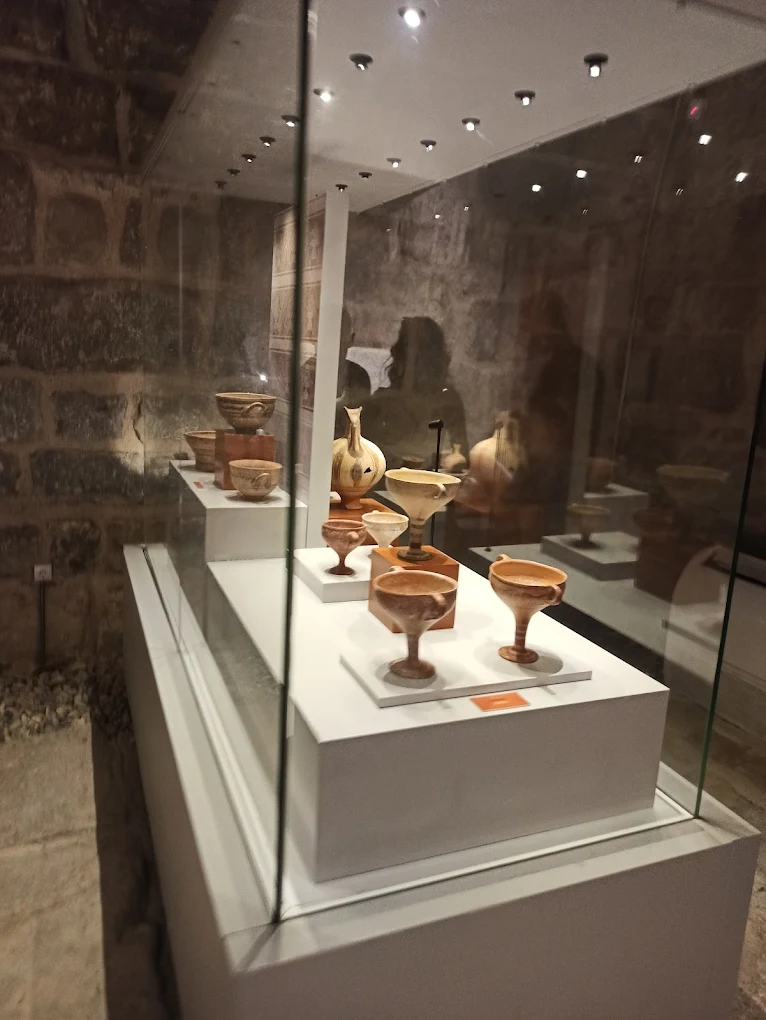
The star of the show, and the centerpiece of the museum, is undoubtedly the collection from the Ulu Burun shipwreck. Discovered by a local sponge diver in 1982 off the coast near Kaş, this wreck dates back to the 14th century BCE, making it one of the oldest known shipwrecks in the world. Its cargo, a veritable time capsule of the Late Bronze Age, tells a powerful story of international trade, diplomacy, and a sophisticated world far more interconnected than previously imagined.
Over 22,000 dives were conducted to meticulously recover more than 18,000 artifacts from the site. The sheer scale and value of the Ulu Burun shipwreck‘s cargo are staggering. The ship was a floating treasury, laden with over 10 tons of copper ingots and one ton of tin ingots, the raw materials used to make bronze. The famous oxhide-shaped ingots, arranged in neat stacks, give a powerful visual of the sheer volume of goods being transported.
But the cargo was not just raw materials. It included precious royal gifts and luxury goods, such as:
- Gold and Silver Jewelry: A dazzling collection of Canaanite and Egyptian jewelry, including a gold chalice and a golden scarab inscribed with the name of Queen Nefertiti.
- Exotic Raw Materials: Objects like elephant tusks, hippopotamus teeth, and ostrich eggshells, all destined for high-status artisans.
- The World’s Oldest Known Book: A small wooden tablet with hinged ivory leaves, which is believed to be the earliest example of a hinged book.
- Glass Ingots: A trove of cobalt blue, turquoise, and lavender-colored glass ingots, some of the earliest intact glass artifacts ever found, revealing the origins of a crucial ancient industry.
This remarkable discovery has completely rewritten our understanding of Bronze Age trade routes and has solidified the museum’s status as a leader in underwater archaeology in Turkey.
From Glass to Gold: Other Remarkable Treasures
While the Ulu Burun shipwreck is the most famous, the museum’s collection extends far beyond the Bronze Age, offering a comprehensive look at maritime history across millennia.
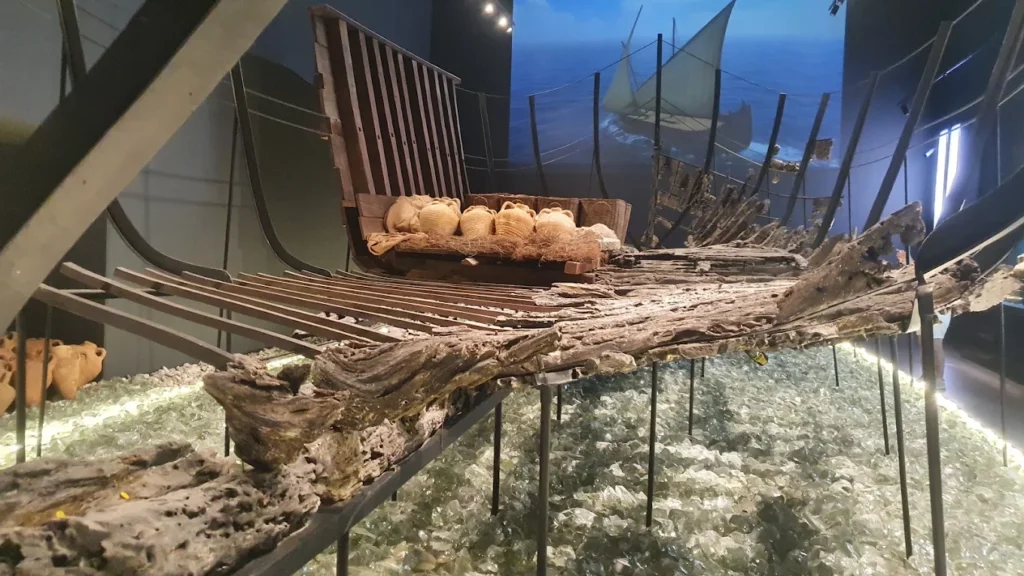
- The Serçe Limanı Shipwreck (The Glass Hall): One of the most enchanting exhibits is housed in the Glass Hall, dedicated to the Serçe Limanı wreck from the 11th century CE. This Byzantine ship was carrying a cargo of an estimated three tons of glass shards and cullet (broken glass for recycling), along with thousands of intact glass vessels. The exhibit not only showcases the delicate and vibrant glassware but also tells the story of an ancient glass recycling and trade network. It provides a fascinating glimpse into a period of history where glass was both a valuable commodity and a testament to artistic skill. The reconstruction of the ship’s hull in the exhibition hall is a powerful representation of the ancient vessel itself.
- The Carian Princess Tomb: One of the museum’s most unique exhibits, the Carian Princess Tomb, is not from a shipwreck but from a 4th-century BCE burial. Discovered in 1989, the tomb contained the perfectly preserved skeleton of a woman, believed to be a noble from the Carian dynasty. The exhibit features an incredible array of gold jewelry, including a stunning golden diadem, bracelets, and a necklace. A remarkable facial reconstruction of the skeleton allows visitors to come face-to-face with a figure from ancient history, bridging the gap between archaeology and a personal story.
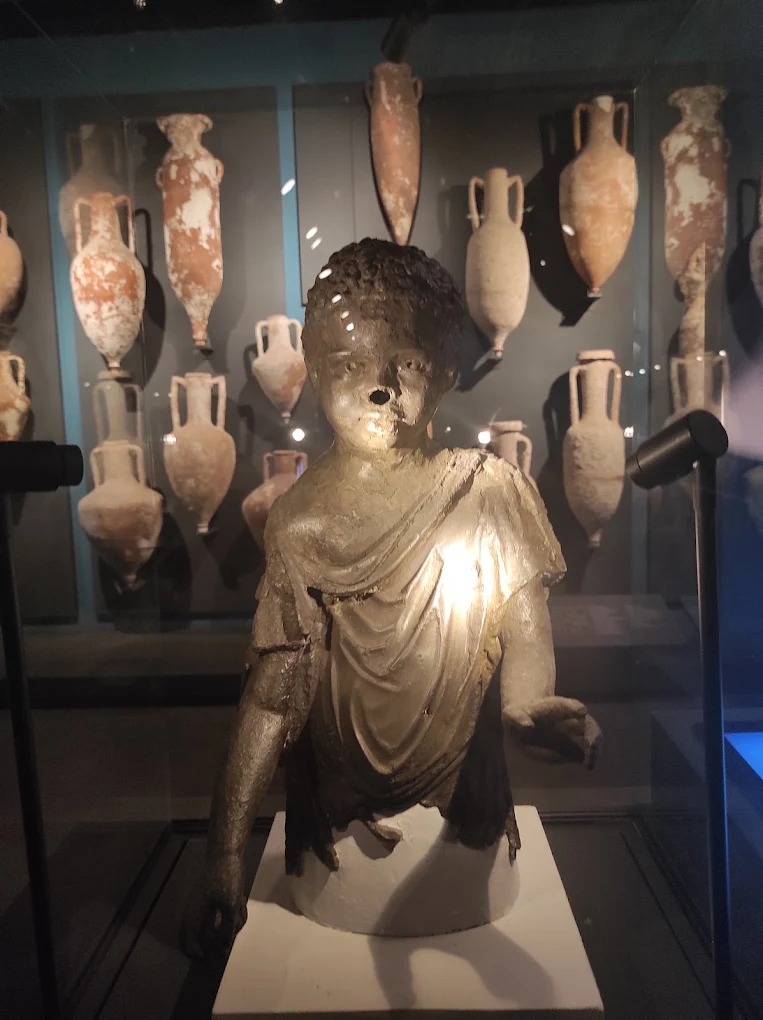
- Other Exhibits: The museum’s many other halls are also rich with history. The Amphora Exhibition showcases a vast collection of the ancient ceramic vessels used to transport wine, oil, and other goods. The Roman Bath and Coin Hall feature artifacts from different periods, from the Hellenistic era to the Byzantine Empire, all recovered from the depths of the Aegean.
The Science of Discovery: Underwater Archaeology in Turkey
The wonders on display in the Bodrum Museum of Underwater Archaeology are a direct result of the pioneering work of archaeologists who brave the depths. The museum is a hub for the science of underwater archaeology Turkey, a field that requires immense skill, patience, and specialized equipment. Unlike land-based excavations, underwater digs face unique challenges, including strong currents, limited bottom time, and the delicate nature of submerged artifacts. The museum itself is a monument to these efforts, dedicated to preserving and studying the maritime heritage that lies hidden beneath the waves.
A Final Word on a Sunken History
The Bodrum Museum of Underwater Archaeology is not just a collection of old things; it’s a window into the forgotten world of ancient mariners, traders, and civilizations. It’s a place where you can witness the astonishing scale of Bronze Age trade, the artistry of Byzantine glassmakers, and the opulence of a Carian noble. All of this is set within the walls of a medieval castle that has witnessed its own centuries of history. To visit the museum is to experience a unique blend of land and sea history, a journey that begins with a walk through a fortress and ends with a deep dive into the secrets of the sea. It is a must-see for any visitor to Bodrum and a powerful testament to the timeless stories carried by the ocean’s currents.